The end of the year is always a time for reflection, but above all, for vision. For the Italian manufacturing industry, the transition toward 2026 does not represent simple continuity, but rather a threshold: the passage from a production model that has guaranteed excellence for decades to a new one, called upon to respond to increasingly complex, global, and interconnected challenges.
In this scenario, one thing is becoming increasingly clear: the future of manufacturing cannot be predicted—it must be built. And it is built on solid foundations, structural choices, and a long-term industrial vision.
Looking ahead to 2026, three major forces are redefining the way industry operates:
- Vertical integration.
In a context marked by geopolitical instability, cost volatility, and fragile global supply chains, control over production processes becomes a strategic asset. Integrating skills, production phases, and know-how within a single industrial ecosystem allows companies to be more resilient, faster in decision-making, and more consistent in quality. This is not only a matter of efficiency, but of managing complexity. - Circular economy.
What was once an ethical objective has now become an industrial lever. Reducing waste, recovering materials, and designing more efficient and responsible processes is no longer optional—it is a prerequisite for competitiveness. Sustainability is no longer separate from performance: today, the strongest companies are those able to combine economic results with environmental responsibility. - Advanced manufacturing.
Understood as the integration of technology, automation, and specialized expertise. Investing in advanced processes improves precision, reliability, and repeatability, while also enhancing human capital, which remains the true driver of industrial innovation.

In this period of transformation, not all companies start from the same position. Industrial models built over time, based on a systemic rather than fragmented vision, are today best positioned to face the future.
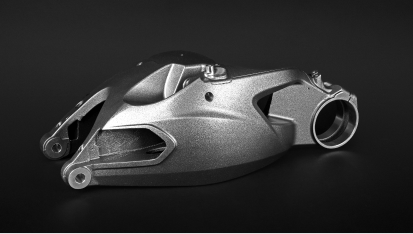
An integrated industrial holding such as VRM represents a concrete example of this approach. Its presence in strategic districts such as the Emilia Motor Valley and the Tuscan fashion district, combined with a vertically integrated structure, allows different sectors—automotive and fashion—to be connected through a common foundation: high-quality metal manufacturing.
This integration is not only organizational, but cultural. Sharing processes, technologies, and expertise enables the creation of real synergies across the entire value chain, improving efficiency, quality, and adaptability. It is a model that does not chase change, but absorbs it and governs it.


One of the distinguishing features of the most advanced industrial models is their approach to sustainability. Looking toward 2026, the difference will become increasingly clear between those who use the language of sustainability as communication and those who translate it into operational decisions.
Integrating circular economy principles into production processes means designing differently, investing in appropriate technologies, and rethinking the use of resources. It also means taking responsibility for leading change rather than merely reacting to it.
Today, manufacturing companies are required to play a role that goes beyond production alone. They are called upon to be active agents of change, capable of generating economic, social, and environmental value over the long term. This is particularly true for structured companies rooted in their territories and embedded in strategic Made in Italy supply chains. Responsibility extends not only to the market, but also to people, districts, and the skills that make Italian industry unique.
As 2026 approaches, one fact becomes evident: the future of the manufacturing industry will not be determined by individual technologies or short-lived trends, but by the coherence of industrial choices. Integration, sustainability, and vision are not trends—they are foundations.
For companies like VRM, which have built a solid, integrated, and innovation-driven industrial model over time, the future is not an uncertainty to fear, but a path to continue building. Because the true value of manufacturing lies not only in what it produces today, but in its ability to create the conditions to endure over time.
And 2026, rather than a destination, represents the next chapter in that ongoing construction.